|
Richard Lehman's Journal Blog 22nd February
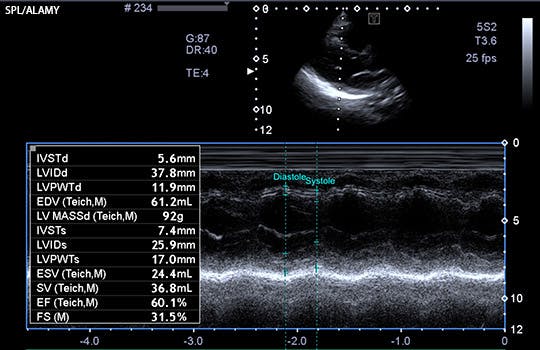
JAMA 17 Feb 2010 Vol 303 623 A child in today's USA has a 50% chance of having a chronic health condition, according to this study of three cohorts covering 6-year periods between 1988 and 2006. Asthma, behavioural and learning problems, and a variety of other physical conditions have all increased during that period, but the biggest factor is obesity. A remarkable 38% in the most recent cohort manage to be above the 95th percentile for weight (explain please, ed.). But apart from weighing, this study didn't actually do anything but ask the mothers a few questions. Not surprisingly, children floated about among the diagnostic categories from year to year. Look elsewhere for hard data about American kids. http://jama.ama-assn.org/cgi/content/abstract/303/7/623 631 The Women's Genome Health Study is a prospective cohort of 19,313 women followed up for a median of 12.3 years, during which they experienced 777 cardiovascular events. In these women, 101 single nucleotide polymorphisms were added with one or two other genomic factors to create a genetic risk score. Surely this would usher in a new era of refined cardiovascular risk prediction? Well, actually it showed no significant association with the incidence of total cardiovascular disease: a simple family history alone was more predictive. On the other hand, there is so much anonymized data about the participants that you could probably find out the full disease status of any individual if you could identify their genome from some other source. This is discussed in a fascinating commentary on p.659. Genomic studies seem almost disconcertingly useless at the population level, but if you know 35,000 gene variants in a single individual, you can measure their left ventricular mass more accurately than if you had an echocardiogram. http://jama.ama-assn.org/cgi/content/abstract/303/7/631 639 You can do it on King Tut too, to a degree. Not many medical papers begin their author affiliations with the Supreme Council of Antiquities of Egypt, but it was they who gave the investigators access to MRI scans and DNA samples from eleven royal mummies of the New Kingdom (1550-1000 BCE). What fun it all must have been, loading up pharaohs into the magnet truck. As a result, we know a lot more about the probable relations between such individuals as Amenhotep III and KV35YL. We know that Tutankhamun had chronic falciparum malaria and died from a broken leg. Bong! Molecular medical Egyptology is born. But beware: I have read the Book of the Dead, and through a curtain of mist I descry investigators perishing mysteriously from the Curse of the Mummy's DNA, to the sound of spooky music. http://jama.ama-assn.org/cgi/content/abstract/303/7/638
NEJM 18 Feb 2010 Vol 362 579 Readers of Raymond Tallis, or of Iain McGilchrist's astonishing new book about the brain(s), The Master and his Emissary, will know better than to try and define consciousness. But at least we thought we could define unconsciousness. Now comes this study - disturbing in every sense of the word - which proves that people in a deep coma can respond if you ask them to think about tennis. Functional MRI showed purposive responses to tennis-based verbal interrogation in a few people in a permanent vegetative state and/or with severe brain injury. If you haven't time to follow the whole paper here, there's a good simplified account in the New Scientist. There is also an editorial by a Boston neurologist on p.648 which ends "... physicians and society are not ready for 'I have brain activation, therefore I am.' That would seriously put Descartes before the horse." Hah! I doff my hat. http://content.nejm.org/cgi/content/abstract/362/7/579 590 Call me old-fashioned, but I like to see evidence from randomised controlled trials with hard end-points before I believe in computer predictions that a certain intervention will reduce new cases of CHD in America by up to 120,000 annually, stroke by up to 66,000, and death by up to 92,000. The editorial on p. 650 suggests a saving in health costs of $10-24 billion. Aha, we save health costs by keeping older people alive longer, do we? Apart from that basic point, there is also the problem that the evidence for salt reduction is - as far as I can tell - nowhere near as strong as the computer model in this economic simulation suggests. The evidence we have is about a surrogate marker - blood pressure - which can be reduced slightly by the sort of salt reductions proposed here and already in force in the UK for prepared foods. On the balance of probabilities, I'm happy to support salt reduction, as I am carbon emission reduction; but that doesn't mean swallowing every extrapolation that zealots come up with. A paper like this doesn't really belong in the world's leading medical journal. http://content.nejm.org/cgi/content/abstract/362/7/590
Lancet 20 Feb 2010 Vol 375 649 The Lancet's usual selection of papers is fairly predictable - a couple of drug-company funded studies of their latest product, a bit of tweaking to some kind of cancer treatment, and then if we are lucky, some good old-fashioned head-counting epidemiology of the textbook sort. Here, four researchers from Newcastle have done a wonderfully thorough analysis of 20-year survival of children born with congenital abnormalities, based on the UK Northern Congenital Abnormality Survey. The charts here will become the definitive reference point for parents and professionals looking after these children. http://www.thelancet.com/journals/lancet/article/PIIS0140-6736(09)61922-X/abstract 673 Non-melanoma skin cancer is not an intellectually challenging topic, but it is an important one: as the population ages, basal cell carcinoma incidence will overtake the total of all other cancers. Perhaps GPs winding down towards retirement should be encouraged to run BCC removal clinics, freeing up dermatologists and plastic surgeons to do more exciting things. BCCs are a product of British summers, when from childhood onwards we rush out and overexpose ourselves on the few days that the sun appears. Squamous cell carcinoma and actinic keratoses are more an ex-colonial and Antipodean phenomenon, caused by constant sun exposure in white-skinned people who weren't designed for this purpose. http://www.thelancet.com/journals/lancet/article/PIIS0140-6736(09)61196-X/abstract 686 A nicely written article on the placebo effect, well worth getting hold of and spending some time with, since "accumulated evidence suggests that the placebo effect is a genuine psychobiological effect attributable to the overall therapeutic context." This is the placebo effect of the clinical encounter, not the dummy pill of the randomised controlled trial. You relieve anxiety, create positive expectations, show empathy, etc: this expenditure comes from the economy of your soul, and creates endorphin-mediated good and addictive feelings in your patients. That is why, after about 20 years, half your consultations are with the same 150 or so patients, for whom you can generally do nothing, and who leave you exhausted. Perhaps you should try them all on naloxone, which abolishes much of the "wonderful doctor " effect in clinical investigations of placebos. That would be unkind: but so, they all tell me, is retirement. http://www.thelancet.com/journals/lancet/article/PIIS0140-6736(09)61706-2/abstract
BMJ 20 Feb 2010 Vol 340 405 In the old days, I would have said "this is a copy of the BMJ worth keeping handy in your consulting room", and so it may be, just for the editorial on urinary tract infections in women by Dee Mangin; but for the substance of the studies, it's best for you to print off the full articles from the links I give. I am soon to visit Party HQ for a quick Introduction to Correct Pico Thought, but as yet I am a shamelessly unreconstructed bourgeois deviationist paper-lover. This Southampton UTIS study deserves your full attention, because it explores all the main strategies that you employ every day in dealing with the lady who rings up with cystitis. OK, get that printer whirring: this is a paper you must discuss with your colleagues, registrar, medical students, patients even. Press PDF, five copies: who needs trees anyway. "I've had awful cystitis since last night doctor." "OK, I'll leave you a prescription for three days of the cefalexin you had last time." Discuss the evidence for this and other strategies for managing uncomplicated UTI in healthy women in the community (15 points). http://www.bmj.com/cgi/content/full/340/feb05_1/c199 406 The mandatory UTIS spin-off cost-effectiveness study. It costs £10 for each day of symptoms saved. Piddling. http://www.bmj.com/cgi/content/full/340/feb05_1/c346 407 The mandatory UTIS spin-off qualitative interview study. Urgently and frequently women with cystitis want antibiotics, and often exhibit dysuria when told to delay. Should I stop taking the pee - or do women expect a sample to be tested? Learn all about it from this analysis of women's views about the management and cause of UTI. http://www.bmj.com/cgi/content/full/340/feb05_1/c279 408 Finally, the loose ends UTIS study, of which more are needed. This shows that women who have a resistant UTI, or are not given antibiotics, get worse symptoms that last more than 50% longer. People of the antibiotic-sparing persuasion should take note. These studies cover most of the questions that needed answers, and I would take them as supporting my normal (quick and easy) strategy, as given above, which doesn't even use a dipstick most of the time. But it would be good to have more detailed information on the effect of duration of symptoms on outcomes and a few other things. Women of Southampton, we have not done with you yet. http://www.bmj.com/cgi/content/full/340/feb05_1/b5633 410 This paper promising ten steps towards improving prognosis research is rather angry in tone, but not angry enough for my taste. "Stemming the tide of low quality, low impact, prognosis research is an urgent priority for the medical and research community." - nice opening. I met one of the authors (Doug Altman) about 15 years ago, when he was just beginning to explore this field of "mile wide, inch deep" research, as shown in Figure 1. I was interested because I'd just learnt about the prognostic value of BNP in heart failure. Eventually I wrote a chapter on prognostic markers and scores in HF, of which there are more than 100. But two stand head and shoulders above the rest: BNP and co-peptin. The rest are junk, by-products of freezers full of blood samples from interventional studies, raided by careerists in search of a quick paper. The promised ten steps in this paper are hidden as a jumble of suggestions in the "ten challenges" chart. Let there be just one step, and the rest will follow: every new prognostic marker or score should be compared with the best marker or score in existing clinical practice.
Ann Intern Med 16 Feb 2010 Vol 152 201 When King James I of England wrote his Counterblaste to Tobacco (1604), the "vile habit of tobacco taking" he blasted against was of course the smoking of pipes rather than cigarettes. Jacobean anger notwithstanding, the pipe has acquired a sentimentally benign image in our own day, a fashion statement to be worn with a soup-stained V-neck jumper and a tweed jacket with leather patches. Why, if I go on any longer in this vein I shall have to buy one. But this stern paper from the USA points out the Jacobean tragedy that awaits even the most bumbling pipe-smoker: increased cotinine levels and decreased lung function. http://www.annals.org/content/152/4/201.abstract 211 The Women's Health Initiative trial was an RCT of hormone replacement therapy which brought about a volte-face in clinical practice but which is described as "far from impeccable" in a letter in this week's BMJ (p.382). Peccability is openly confessed in this Lenten analysis of the effect of continuous combined HRT on coronary heart disease. They more or less admit to residual confounding and small subgroup sizes. The bottom line message is that continuous HRT may confer added risk of CHD in the first years, then decreased risk after 6 years. Which is not quite what we were all initially led to believe. http://www.annals.org/content/152/4/211.abstract 218 A couple of times over the last 30 years, I have initiated permanent anticoagulation for severe recurrent superficial thrombophlebitis with the reluctant concurrence of the local haematologist. We're taught that such events are benign and self-limiting and do not herald serious thromboembolism, but this French study casts doubts on that. In fact 25% of subjects with superficial phlebitis of 5cm or more had or went on to develop deep vein thrombosis in this series of 844 consecutive cases in a specialist referral centre. We need some primary care studies, quite urgently. http://www.annals.org/content/152/4/218.abstract
Some Proverbs of Sumer
I love the proverbs of Sumer, which are the oldest recorded sayings of mankind, set down in collections on clay tablets around 2,500 BCE, but clearly much older than that. Human beings have not changed at all.
Whatever it is that hurts you, don't talk to anyone about it. He who possesses many things is constantly on guard. He who keeps fleeing, flees from his own past. If the lion heats the soup, who would say "It is no good"?
|
Recent Entries
Most Recent Tags
|